I wish I'd invested more time early on during development of my own work in progress (2001 to present) to harnessing WL Graph functionality to track game state dependency. My interactive fiction's also in a discrete choice-based system, so somewhere between a "game book" and a modern text-parser game on the scale of how quickly the game state can branch.
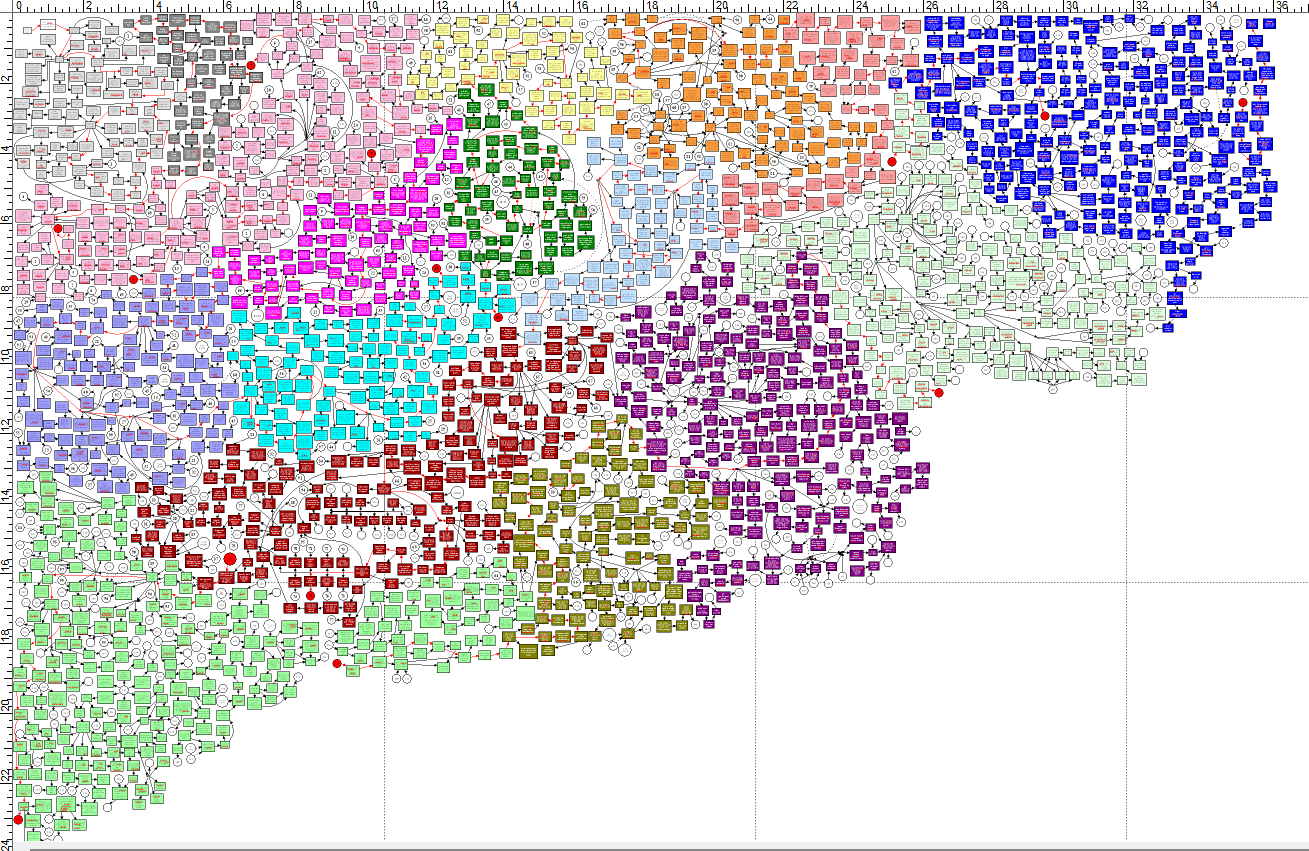
Instead of Wolfram tools, I just used flowcharting software to build up a dependency graph, where each node wasn't a complete state of the game, as with a CYOA-style book, but a permanent advancement in some aspect of the game state, with one (or more) nodes pointing to another if the former were (all of the) prerequisites for the latter. Example with three linked nodes:
[Find Key] ---> [Take Key] ---> [Unlock Door]
A serious drawback was just how inflexible and cramped a flowchart can become with no automatic functionality for spacing out nodes logically. The attached image shows an overview of how large the chart became (in 2004) by the time I maxed out the number of allowed links by the software and gave up on charting things this way. (The game's start point is in the top-left corner, and roughly speaking, the further down/right one moves, the deeper into the game is being represented.)
This post's got me interested once against in trying to build up my current inforrmation in a graphable structure, if I can be confident it can handle on the order of twenty thousand nodes!